
Four-minute read
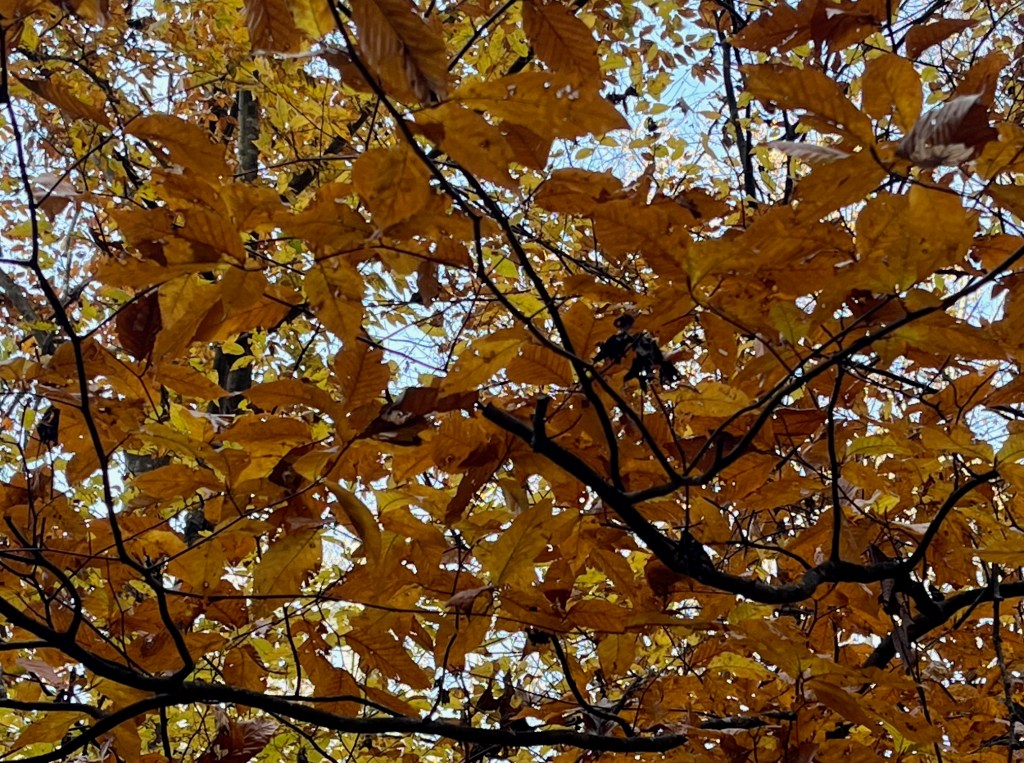
I return to Kanawha State Forest, this time amid bright autumn light. Beneath a blue, sunlit sky, the sturdy bones of sycamores gleam, and the golden, leafy boughs of beeches glow.
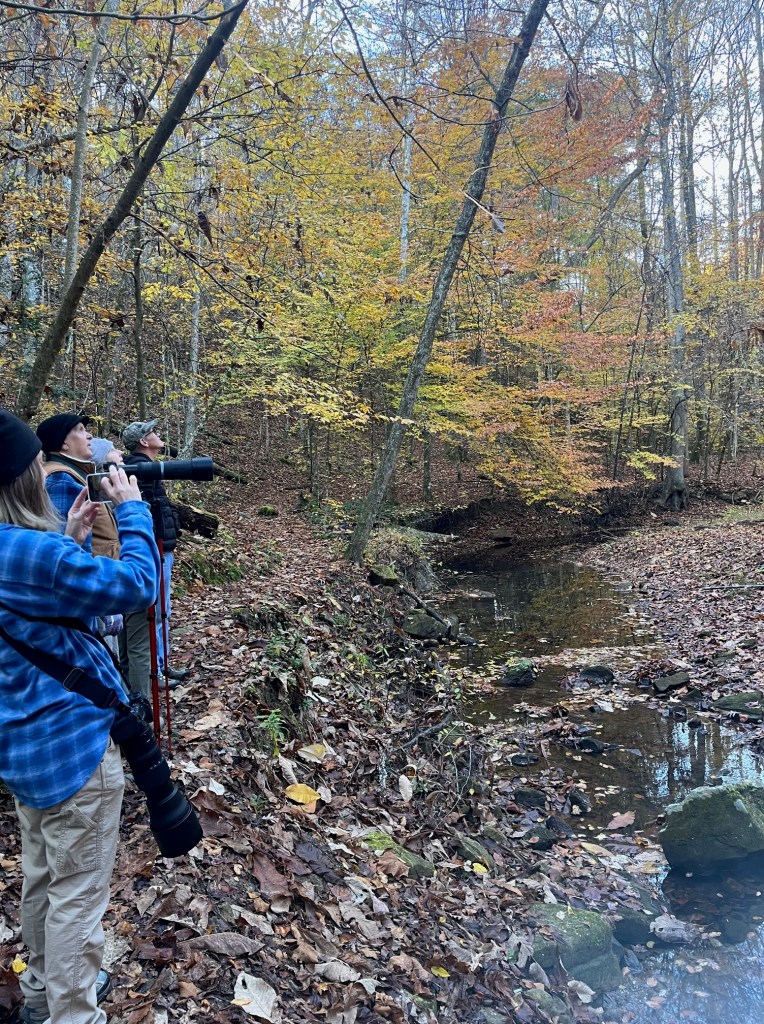
Seven hikers, in warm hats and gloves, ply a shady trail. Our leader, Chris Gatens, knows the forest like he knows the alphabet. Like he knows how to add and subtract. He knows the names of trees and other plants like he knows his own. His is an intimate knowledge that comes from being a curious child in the woods. His parents were his first teachers.
As we walk beside Davis Creek, Chris points out a butternut, or white walnut, tree and notes its bark’s silvery cast. Not common in this forest, the butternut likes ravines and rich soil, he tells us.
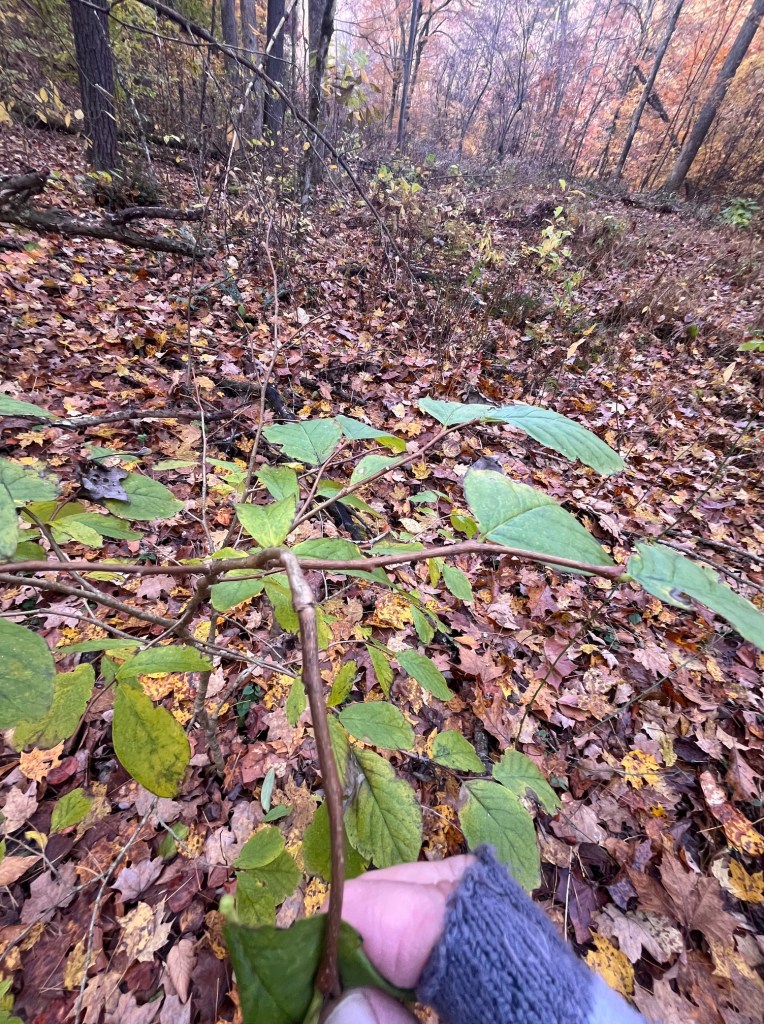
He then shows us a shrub-sized Eastern leatherwood, with spindly branches that bend but do not break. This is the characteristic for which the plant is named.
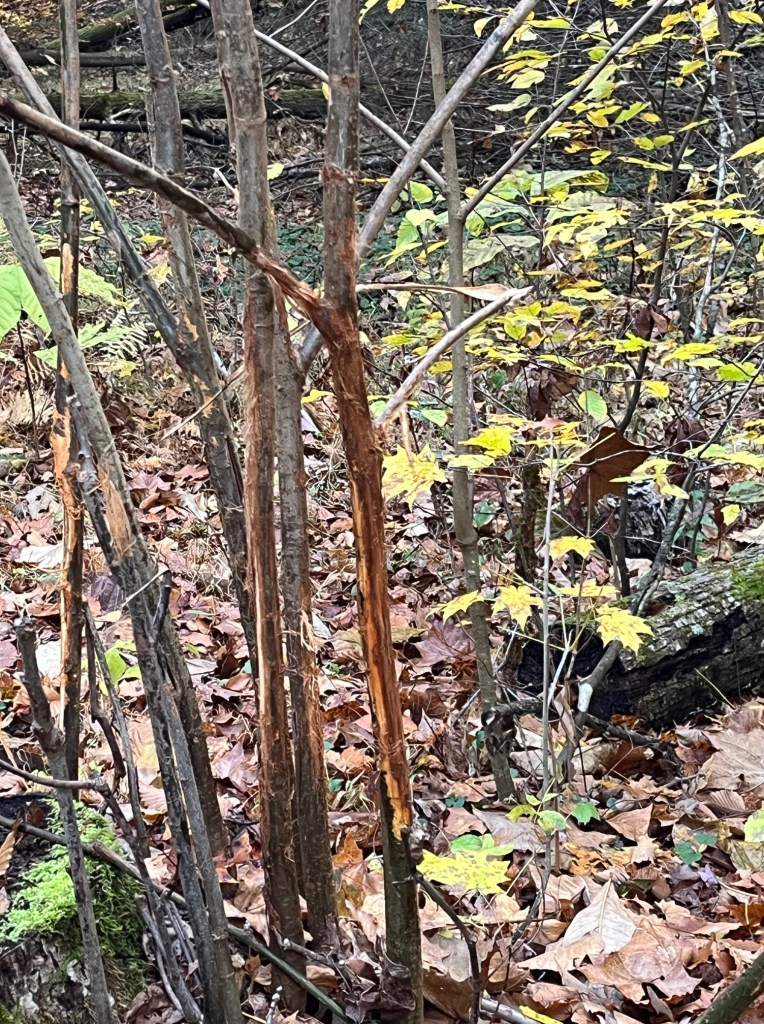
With his keen eye, Chris then notices a basswood tree, thin and stalk-like, its bark stripped and stringy. “A buck marking its territory,” he tells us.
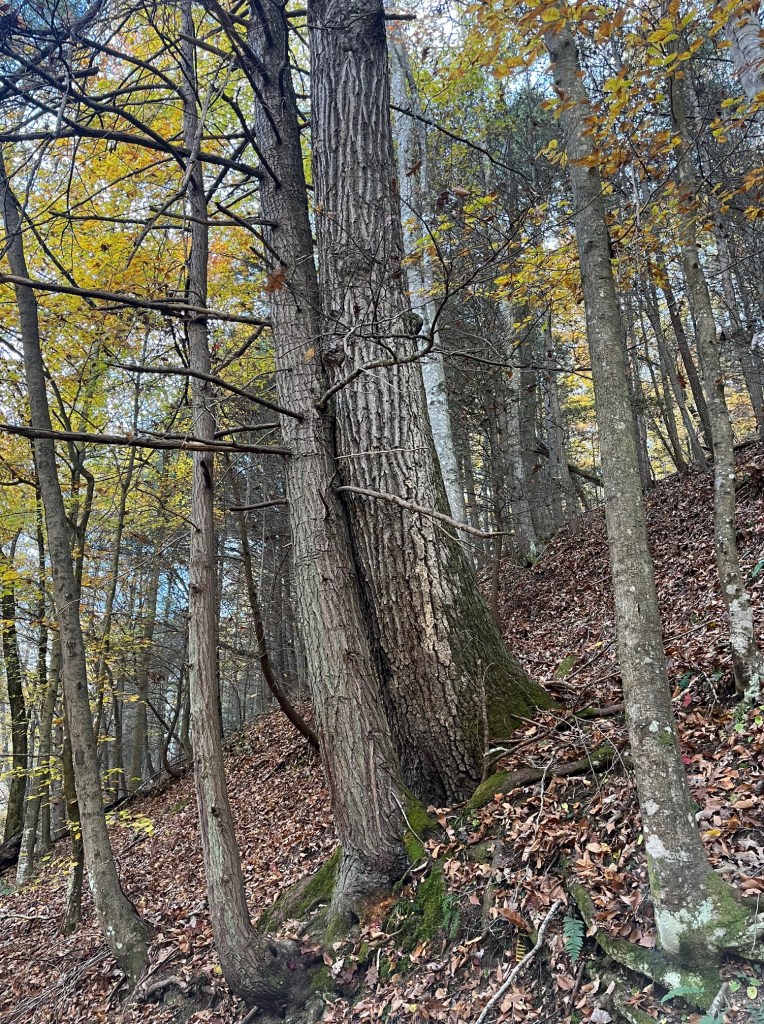
Later, we find a Northern red oak, leaning against an Eastern hemlock. The trees are so close, it’s as if, like an old couple, they have grown together. The pair are perched precariously on a hillside. The hemlock looks dead, likely from infestation by the hemlock wooly adelgid. Native to Japan, these aphid-like insects feed on hemlock sap in winter and early spring, preventing the trees from producing new needles in summer. Without replacements for old needles, the trees die.
Red oaks are known for the silvery “sled tracks” on their bark, and this one may be 150 years old. Yet, it may not have many years left, Chris tells us. Perched like it is, it will likely blow over someday.
As we watch a pair of Eastern towhees pluck and eat oriental bittersweet berries, we witness the dichotomy of forest life: the birds like the berries, but the plant is highly invasive and crowds out native plants. By eating the berries, the birds help spread the invasive plant.
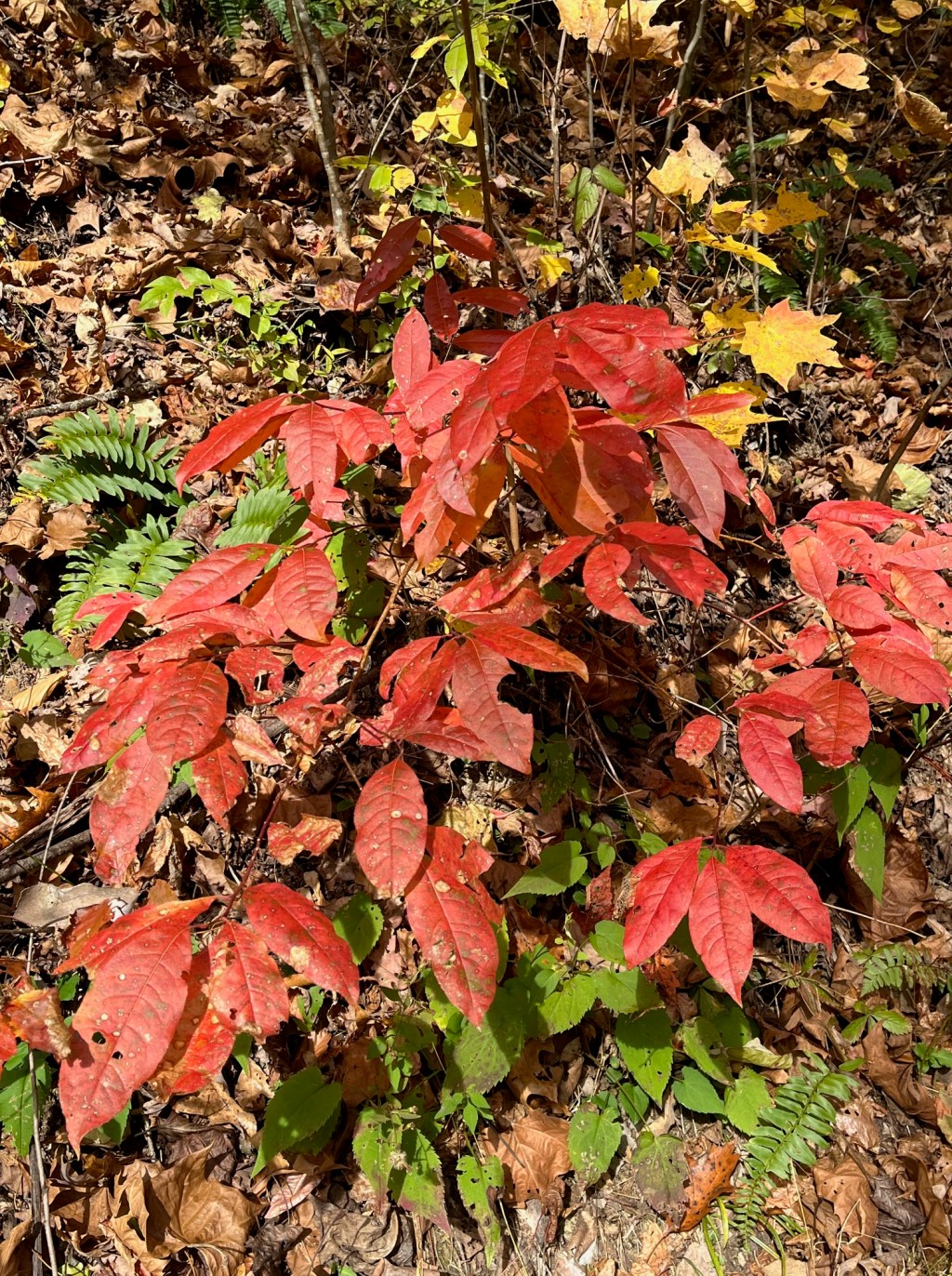
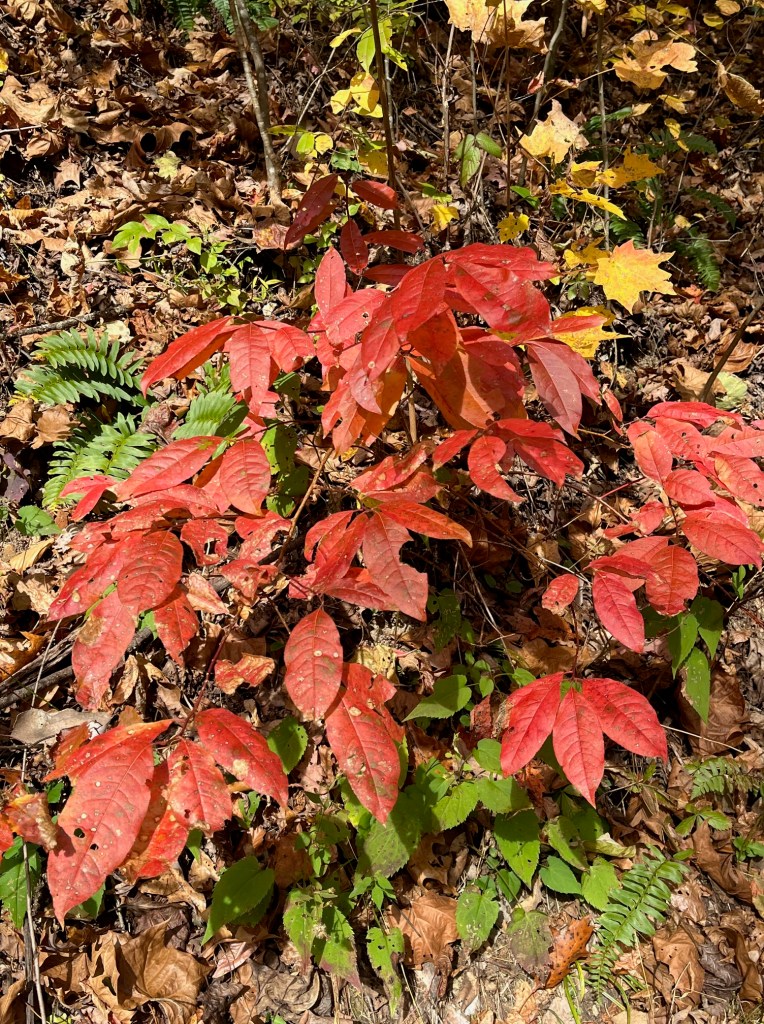
We see several tall, arching sourwood trees, topped with flaming. scarlet leaves. The trees arch to seek more sun. The very ends of their leaf stems are known for their sour taste. Yet, the one I sample only tastes woody. Perhaps they are sourer in spring.
Meanwhile, in addition to the towhees, we hear and/or see 15 other species of birds, including a number of crows carrying on loudly, white-throated sparrows, white-breasted nuthatches, chipping sparrows, goldfinches, cardinals, downy and red-bellied woodpeckers, and one belted kingfisher, which follows the creek in fast flight.
As our hike ends, a few of us find it hard to give up the forest, now warmed by the sun. We sit on benches in a clearing, listening and watching. All around us the wind guides leaves to the ground. Some float gently, like sailboats descending from the sky. Others twirl like tops to a soft landing. Still others do somersaults, tumbling tip over stem, over and over again.
A pair of red-tailed hawks appear high above us, deftly riding the wind currents. Like the hawks, my thoughts circle and drift. When you love something (or someone), you want to know everything about it. You want to know it deeply and well.
I will never know the forest as intimately as I would like to. But after smelling its dusky fall aroma; after seeing the flame leaves of the sourwood and tasting the end of a stem; and after feeling the flexibility of leatherwood and hearing the white-throated sparrow’s whistle, as it settles into the forest for winter, I know it just a little bit better.
Note: Chris Gatens is the coauthor, with Emily Grafton, of Wildflowers and Trees of West Virginia, available here: www.wvbookco.com.


 Sheila McEntee
Leave a reply to Laura Boggess Cancel reply