

Settle in … eight-minute read!
The words were ominous. And certainly incongruent. They were emblazoned on a Wendy’s billboard I passed recently on my way to a doctor’s appointment.
“Misfortune Awaits,” the sign said. “Lucky You.”

Sitting at a red light, I read the words again. On a Wendy’s marquee, I’m used to seeing sales hype about Frostys or bacon double-cheeseburgers, but not the portending of doom.
The light soon turned green and I moved on. Yet the words stayed with me. They reminded me of the old adage “No bad things happen to writers.” This infers that even if bad things DO happen, you can at least turn them into artful prose or verse.
Perhaps the Wendy’s sign was telling me that something bad was about to happen, but it was OK because I would write about it. The sign was correct on both counts.
Soon I was sitting in my doctor’s waiting room. But I didn’t wait long, and my appointment was uneventful. No bad news. Whew. The rest of the day held only a hike in the woods with a dear friend. I forgot about the sign.
Later, setting out for my foray with Martha, I was prepared. It was early August and temperatures hovered in the low 80s. Nonetheless, I put on long pants and calf-high socks. I sprayed myself liberally with insect repellant, down to the toes of my hiking boots. I covered my head with a cap. I thought, if ticks get on me, they won’t have a chance.
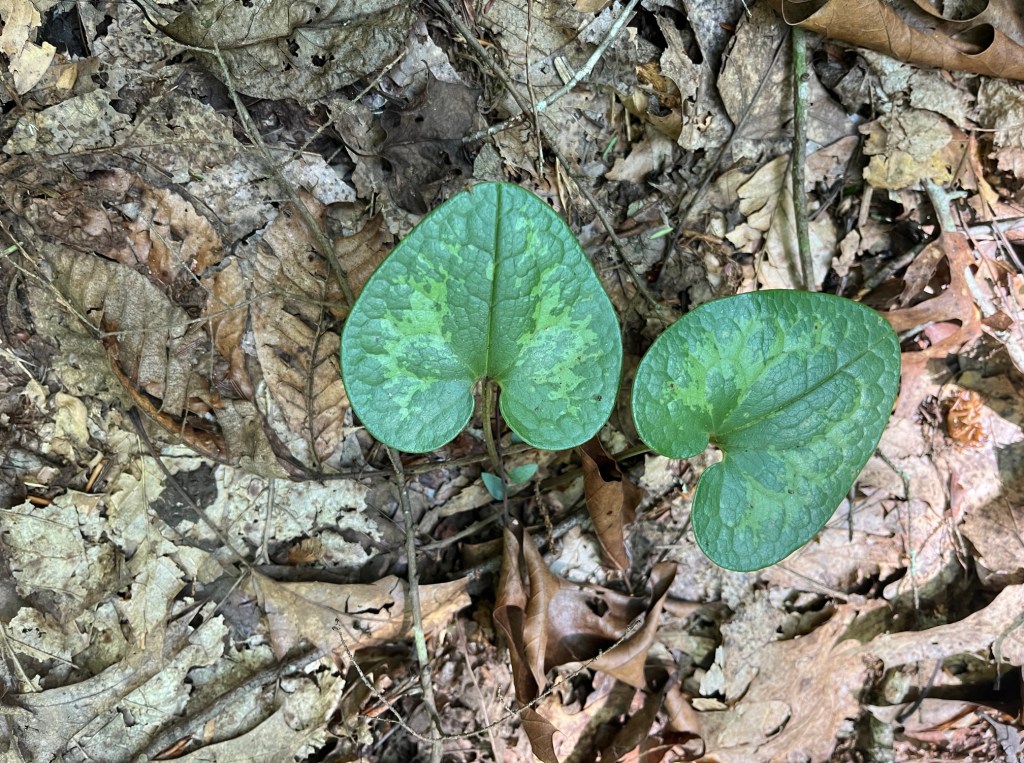
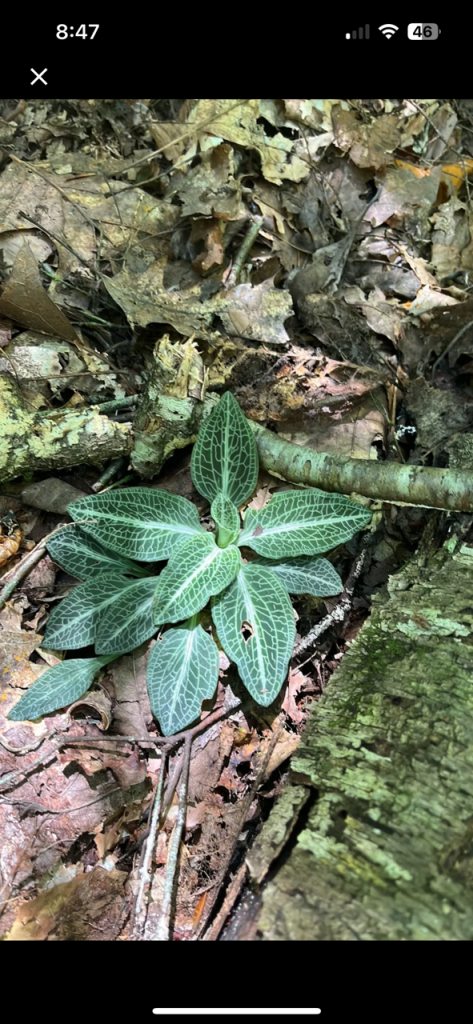
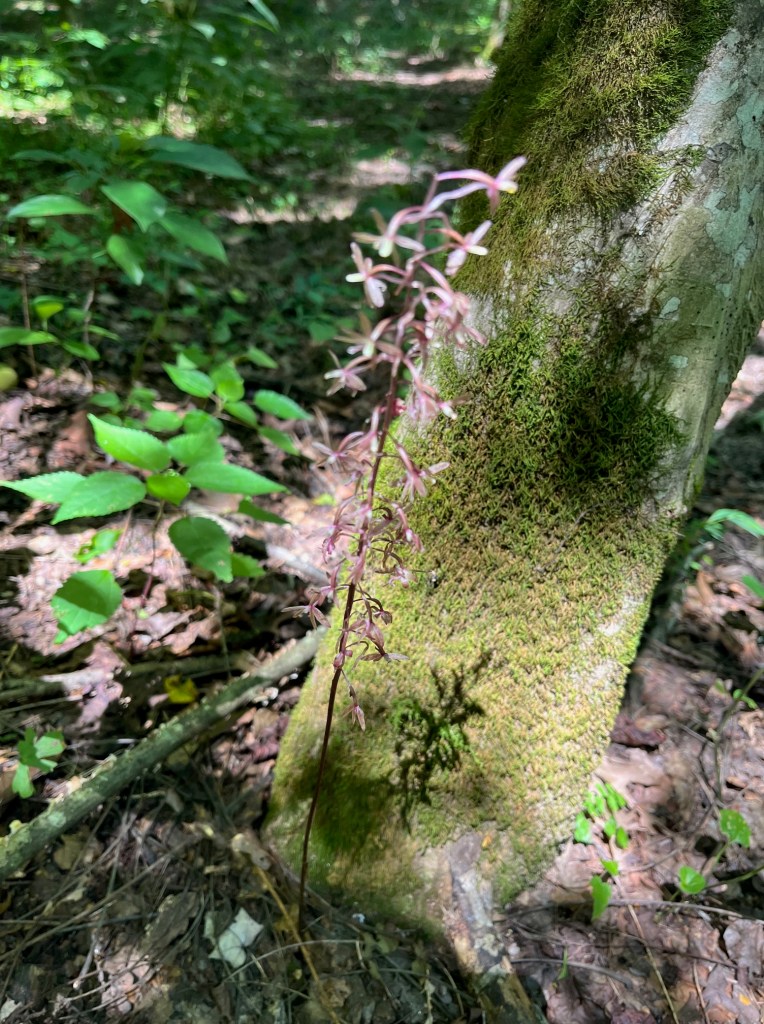
Martha and I hiked for a couple of hours, first on dirt trails and then across a shallow creek and into some tall grass. We spied the glossy, spade-like leaves of wild ginger; the soft, veiny rosettes of sunlit rattlesnake plantain orchids; and the tall stems and bell-like blooms of puttyroot orchids. We told stories and caught up on each other’s lives.
When I got home, I got a text saying friends were gathering that evening for dinner at a Mexican restaurant. I quickly stripped off my sweaty clothes and tossed them into the washing machine, no ticks in evidence. I took a shower (still no sign of ticks), put on a skirt and sandals, and went out the door.
That night, the gloomy Wendy’s sign a distant memory, I climbed into bed and fell asleep easily. Yet, I woke at four in the morning, my feet and ankles afire. Something had bitten me after all. Bleary-eyed, I sprayed my lower legs and feet liberally, this time with calamine lotion, and went back to sleep.
A couple of hours later, I woke again to a burning itch. Now I could see the bites emerging, raised and red: nine on my right foot and ankle, and six on my left. I texted Martha. She, too, had bites, but they were on her upper legs.
The number of bites and the flaming itch were familiar: chiggers. But how could one have gotten between my toes? Chiggers can do that.
“Next time, let’s do lunch,” Martha wrote.
According to the Cleveland Clinic, chiggers are a species of mite and a close relative of spiders and ticks. They are microscopic. In their larval stage, they attach to clothing and then move to the skin of humans or animals to feed. They then fall off and turn into adult mites.
In the next several hours, my chigger bites turned into intensely itchy, fluid-filled blisters that flared with the touch of a sock or shoe, or even a sandal. Walking my dogs, even a short distance, was torture. I sped them around the block once and then retreated inside, where I stripped to bare feet and dabbed on cortisone cream to quell the itching.
After nearly a week of this, I was still waking in the night itching, though Benedryl helped some. The bites began seeping yellow fluid. Some scabbed over. Still others remained round, hard, and fluid-filled. Socks and shoes became tolerable, but only for short periods. I made it to the grocery store and back. After about two weeks, the bites had mostly drained and, blessedly, stopped itching.
This debacle was like a fireworks grand finale (I hoped) in a series of chigger explosions. A couple years earlier, I encountered them while mowing grass in my backyard. I suffered multiple bites. After this, I learned to cover up well, like I did for my hike, while mowing in the backyard. This strategy was mostly successful.
Yet, very recently, I’d concluded that the insects were in my front yard too. Even after short stints of playing ball with, or picking up after, the dogs, I’d found single bites on my thigh, the back of one knee, around my waist, and even on my scalp.
In August heat, I began covering up and spraying every time I went into my yard. Even a dash to the mailbox for 30 seconds involved long pants, high socks, long sleeves, and a hat. When I came back in, I peeled off all the layers and put them in the dryer on high. Ha! No chigger could survive that!
Indeed, it felt like the tiny insects had turned me into a crazy person, one who longed to linger in my garden, feel just a touch of sun.
I had to do something. I will not use commercial herbicides or pesticides in my yard; I fear the risks to wildlife, my pets, and myself. A Google search informed me about diatomaceous earth, which is a flour made from freshwater fossil shells. It is all natural. The food grade variety is used in horse feed to prevent clumping. Though it is powdery to our touch, the texture of diatomaceous earth cuts through the exoskeletons of crawling insects and kills them.
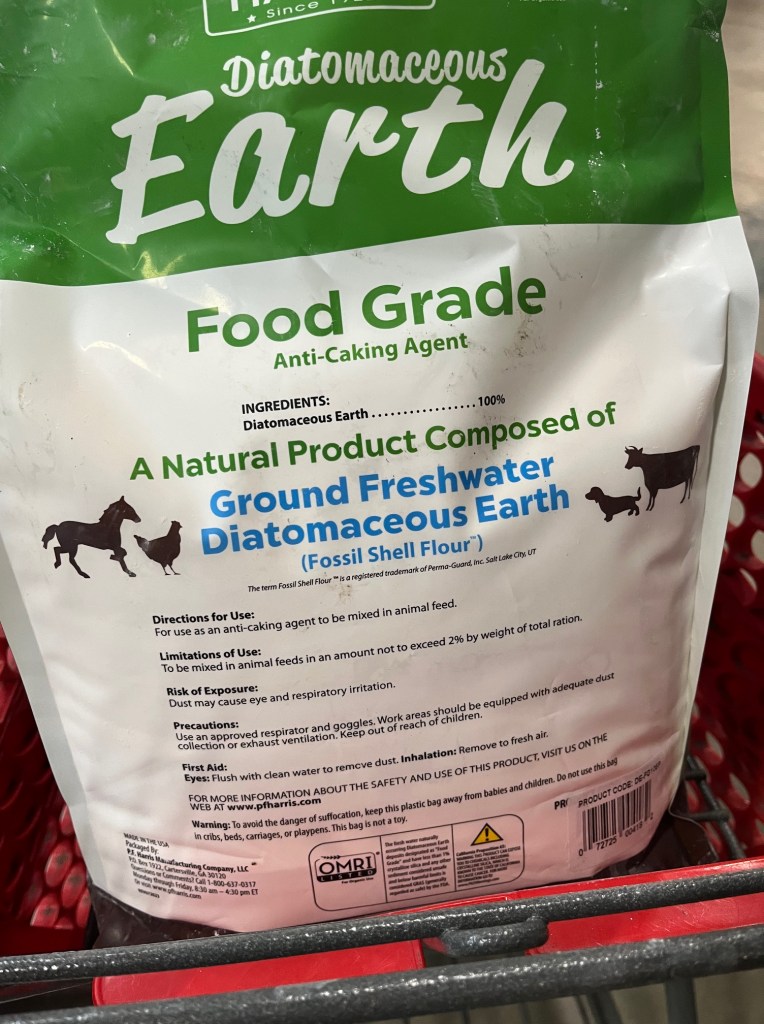
I bought three thirty-dollar bags at Green’s Feed and Seed and hired Cassie, a landscaper who claimed that chiggers never bother her, to do the job. On the appointed day, she arrived with a respirator (the powder is very fine), gloves, and a spreader. She went to work. When she finished, she proclaimed that my yard looked like a powdered donut.
Indeed, she, too, looked like she’d been laboring at Krispy Kreme, not outside. Thereafter, for the next week, there being no rain, the dogs came in looking like powdery confections. Each time, I’d wipe them clean.
In a week, Cassie repeated the process. Since then, I have begun venturing to the mailbox in shorts and sandals. I’ve had a couple bites. But did they happen in the yard, or at the park where I stepped briefly into the grass while walking the dogs?
Do I dare go outside to rake leaves in my front yard? Do I pot the pretty yellow chrysanthemum I bought last week?
Clearly, it will take time to get over my chigger trauma. The insects cannot survive in temperatures below 42 degrees. Perhaps the nip of fall will be extra welcome this year.
Indeed, now several friends, none of them strangers to gardens and woods, have reported similar itchy bumps that turn to blisters. Hmm. I wonder if any of them passed by that Wendy’s sign.


 Sheila McEntee
Leave a reply to suitgleaming37e08d236a Cancel reply