
(Three-and-a-half-minute read)
Tucked away, on the outskirts of Morgantown, is a paradise of colorful gardens, wooded trails, grassy wetlands, and quiet streams. Here, you will lose yourself amid countless blooms, tall oaks and hemlocks, songbirds, butterflies, and dragonflies.
I visited the West Virginia Botanic Garden (www.wvbg.org) for the first time last weekend, when the Garden hosted a nature walk and I read from my new book, Soul Friend and Other Love Notes to the Natural World. It was a magical experience, even in steamy mid-July.
With a “feels like” temperature in the high 90s, about 15 non-heat-averse adventurers gathered at the Garden’s education center. From there, naturalist Abigail Waugh led us first thorough cultivated gardens bursting with color: creamy-white hydrangea blossoms, soft pink coneflowers, bright yellow sunflowers, deep purple petunias, and bright-blue bee balm, to name a few.
But with the sun beating down, we soon retreated to forest shade, where Abigail pointed out fungi and wildflowers, including striped wintergreen and ghost pipe. She talked about the deep, parallel grooves in a red oak’s bark, the black oak’s fuzzy leaves, and the way “nurse trees”—that is, fallen, rotting trees on the forest floor—nurture new ones that root in their nutrient-rich, decaying trunks.
Later, we returned to the education center, where we all grabbed a drink of water and I read two essays from my book. Sharing my love of the natural world, after the joy of being immersed in it, was a special gift.
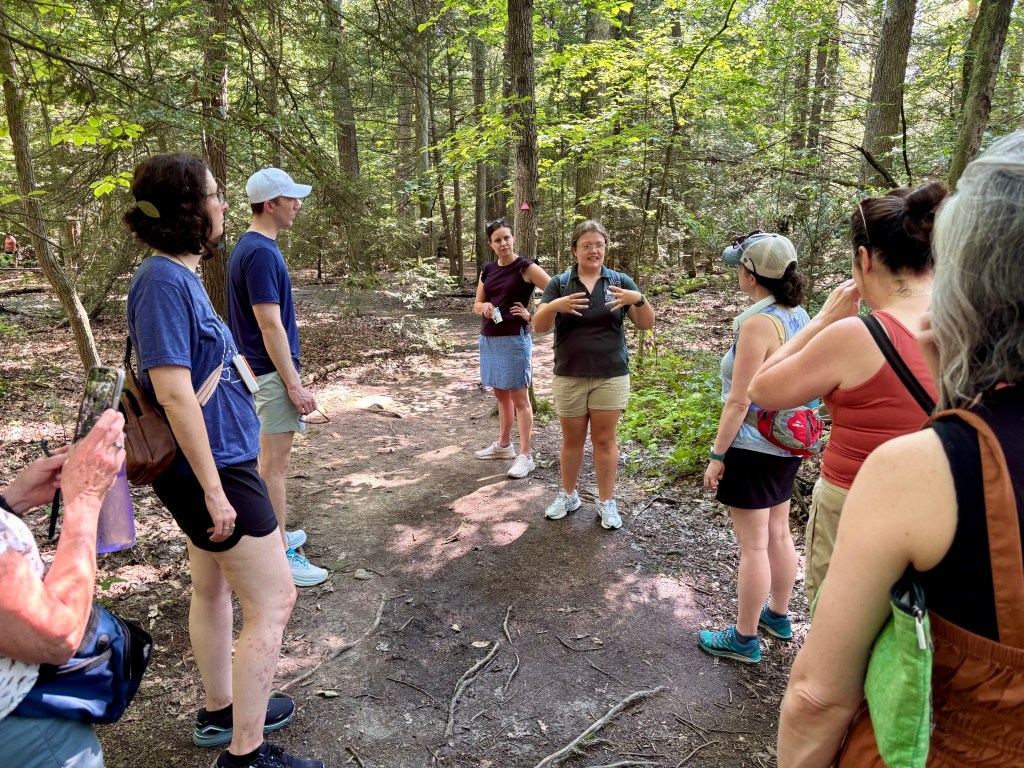
Abigail Waugh leading our nature walk. Photo by Dan Day (jerseybirder.com) 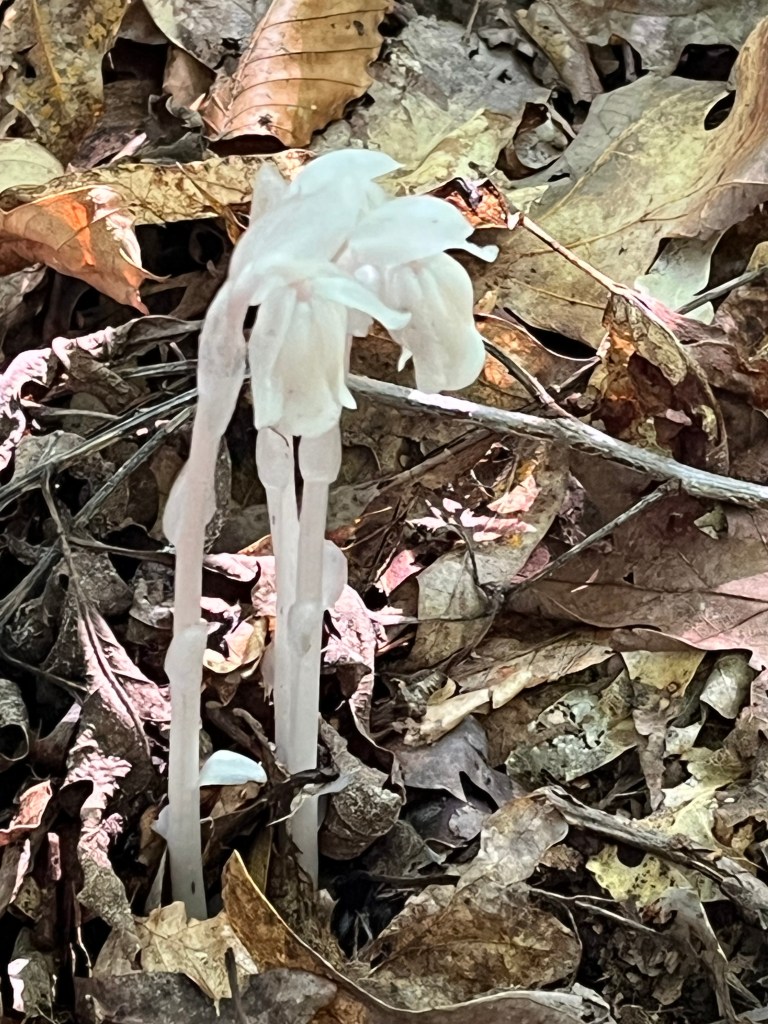
Ghost pipe is often found in small clusters on the forest floor. 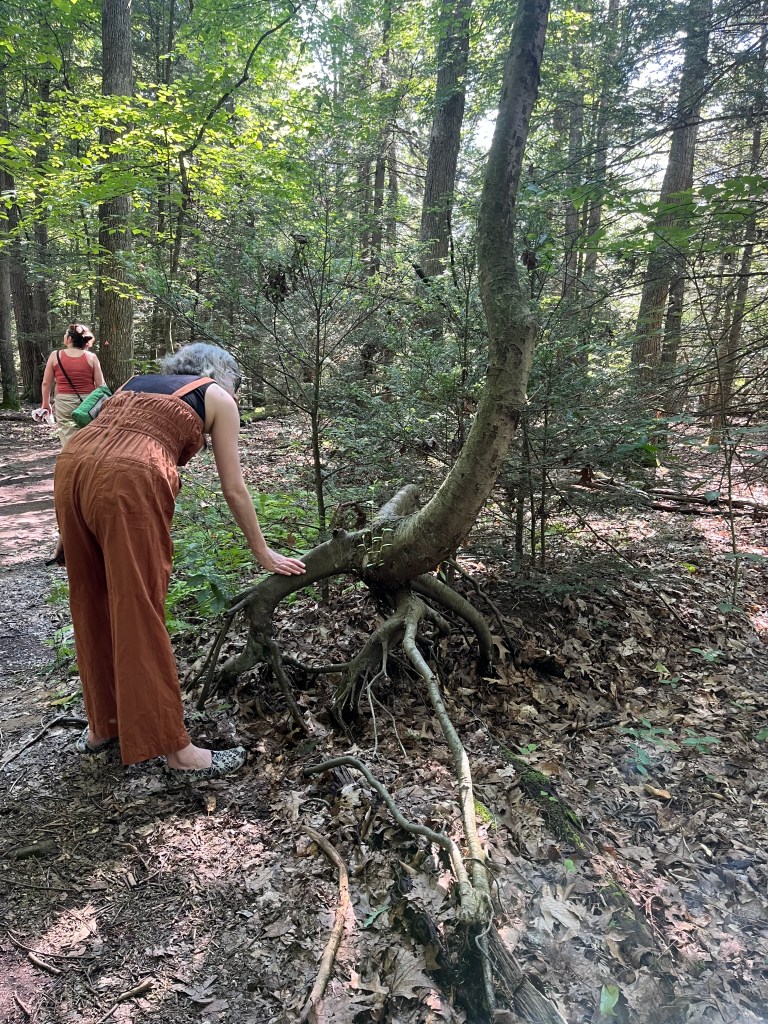
A hiker investigates a tree rooted in a nutrient-rich “nurse tree.” 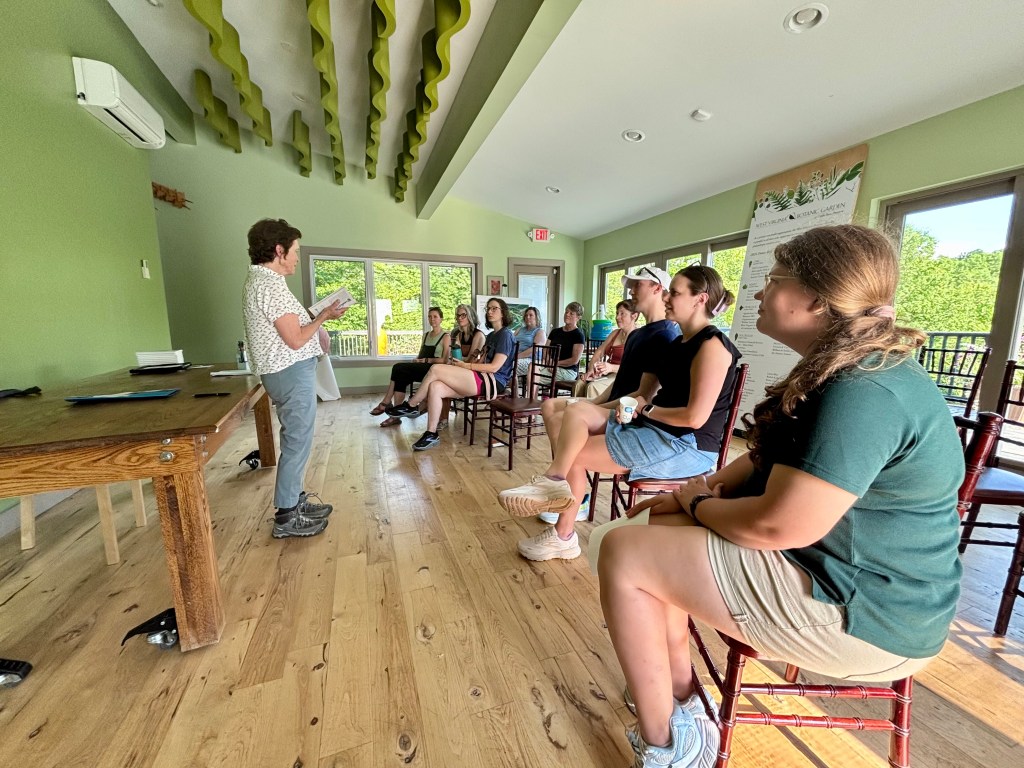
Reading at the West Virginia Botanic Garden Education Center. Photo by Dan Day (jerseybirder.com) 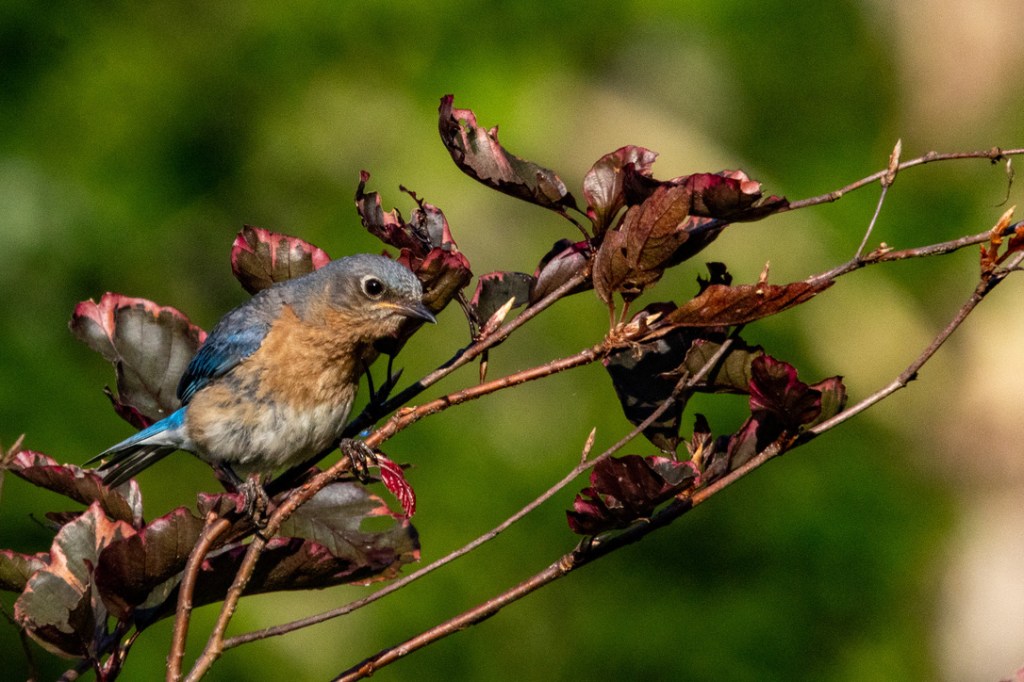
Bluebird at the West Virginia Botanic Garden. Photo by Dan Day (jerseybirder.com) 
A Monarch butterfly atop purpletop vervain. Photo by Dan Day (jerseybirder.com) 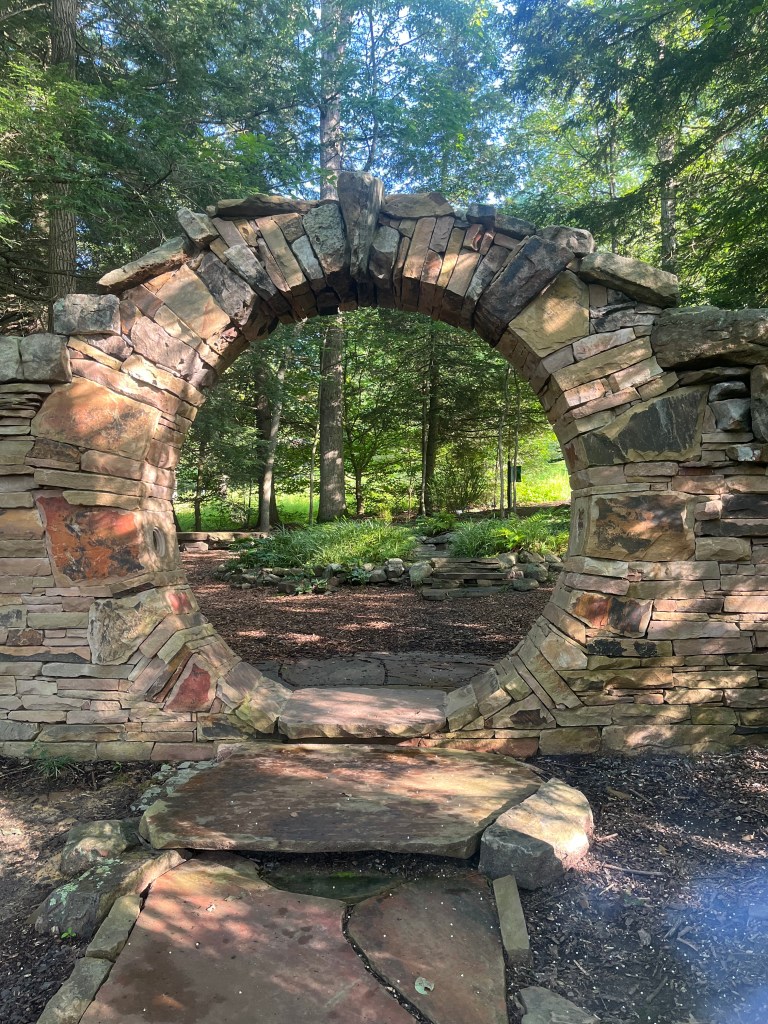
In 2023, stonemason Wes Boddy built this stone moon gate in the West Virginia Botanic Garden.
Early the next morning, Dan Day, my dear friend and fellow birder and blogger (jerseybirder.com), and I returned to the Botanic Garden to do some birding. Dan had driven all the way from New Jersey to attend the nature walk and my reading.
Walking through the Garden’s varied habitats, we excitedly recorded sightings of bluebirds in the grassy, open area near the cultivated gardens; a red-winged blackbird calling near the pond; a tree swallow that dive-bombed us repeatedly near the wetland area, where it valiantly protected its young inside a nest box; and—my favorite—a Louisiana waterthrush that skittered briefly in front of us on a path running parallel to a shaded stream.
Ubiquitous throughout the garden were the spritely, almost robin-like song of the red-eyed vireo (listen here: https://tinyurl.com/mwjb47hv) and the soft “Pee-weeeeee” drawl of the Eastern wood-pewee (listen here: https://tinyurl.com/48cvhwzk).
The day before, a listener at my reading had asked me what I feel most when I venture into the natural world.
“Awe,” I said, without hesitation. Indeed, it is hard not to be awestruck by a cluster of ghost pipe, hiding deep in the forest understory, or the flame-orange and polka-dotted Monarch butterfly, foraging peacefully atop a purpletop vervain bloom.
Speaking of peace, the Botanic Garden also features a group of hammocks strung between tall trees, where you can relax, gaze at the forest canopy, and breathe deeply. Or maybe even take a nap.
There are many wooded retreat places in the hills of West Virginia, but few have the charm of the West Virginia Botanic Garden. I hope you will go see for yourself soon. I can’t wait to go back.
Note: Bird sound recordings from the Macauley Library at the Cornell Lab of Ornithology.


 Sheila McEntee
Leave a reply to moviemavenweb Cancel reply