
(Three-minute read)
As I write this post, I hear a sound outside that defies words. Not a buzz. Not a hum, or even a thrum. I might liken it to the non-stop cheering of a faraway crowd. Indeed, there is a fervor, a fever, to it.
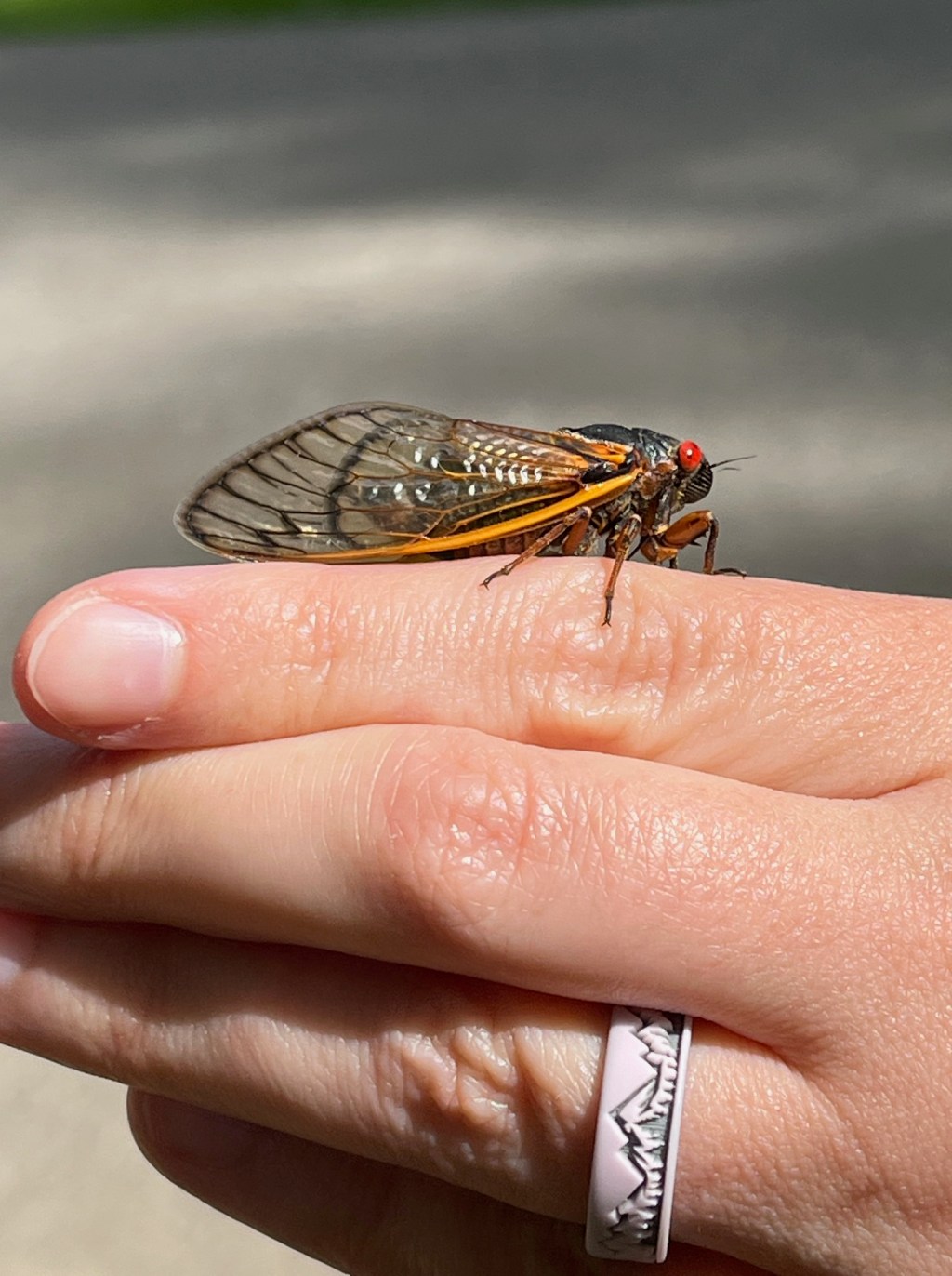
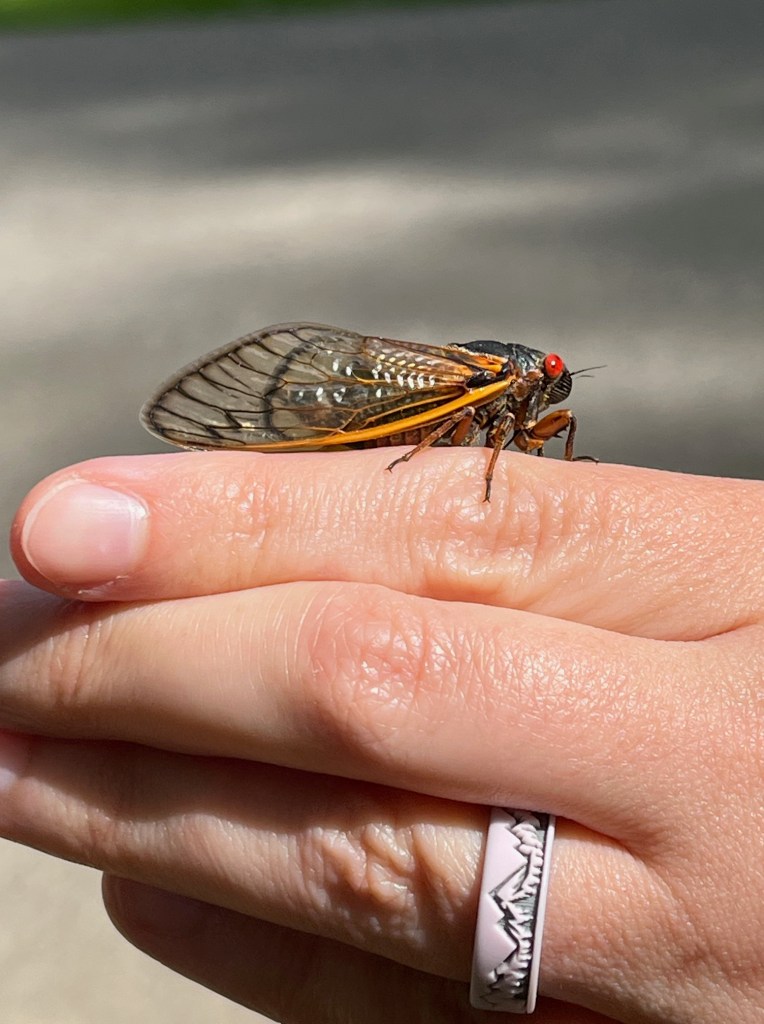
Though I don’t know how to describe the sound, I do know what it is. On this temperate spring day, countless male cicadas, are “singing” by flexing their tymbals, the drum-like organs found in their abdomens.
The males create this vibration to attract females. Their goal is to mate as many times as they can in the last few weeks of their lives. The females’ story is different. Once they mate with a male, they deposit their eggs safely into the bark of a tree. Then, they die.
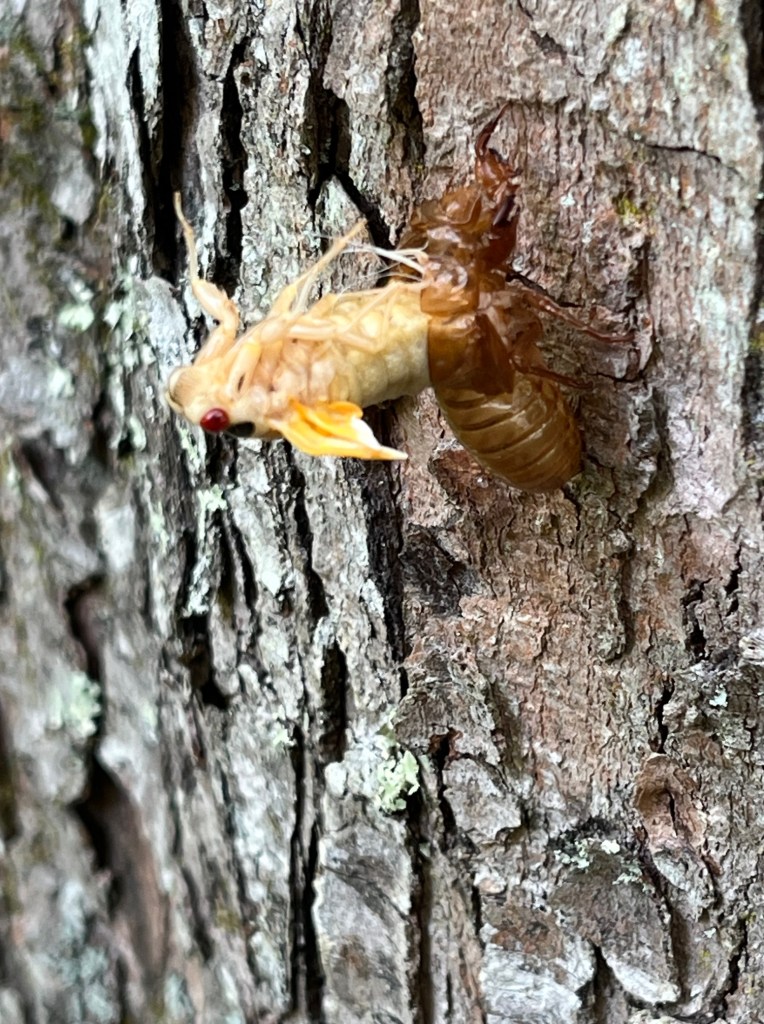
The cicadas emerging now in West Virginia are members of Magicicada Brood XIV, insects that last felt the sun and wind in 2008. From eggs, they hatched into white, ant-like insects and began to feed on sap. When they were ready, they crawled out of their cozy shelter and fell to the ground, where they dug into the soil until they found small roots to feed on. Gradually they worked up to larger tree roots and followed them, tunneling and feeding underground.
The species we are now seeing in West Virginia are periodical cicadas that emerge only every 17 years. Scientists say their emergence is triggered by an internal molecular clock that keeps track of the passage of years.
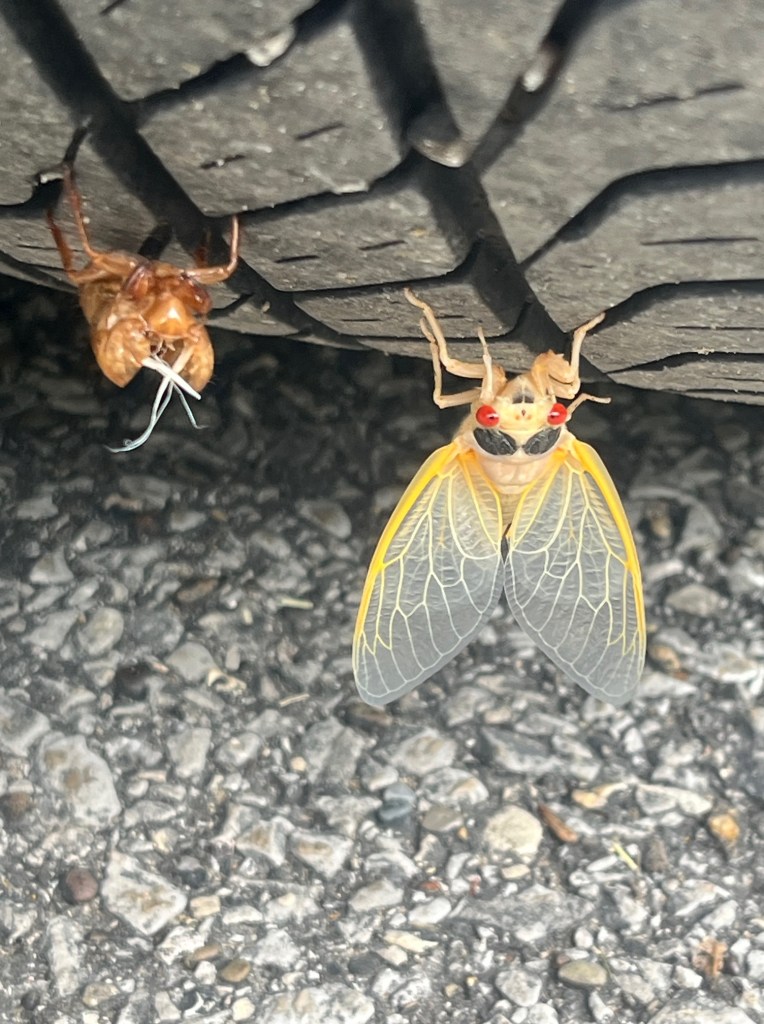
Coaxed by warming soil temperatures, they emerge as nymphs. The nymphs climb a tree or stalk or fence post, where they shed their exoskeletons and air-dry delicate, new wings. In less than an hour they are ready to fly—sometimes in swarms—into the treetops to begin the last phase of their lives.
Pondering the life cycle of cicadas, I began to think about the last 17 years of my own life. There were many milestones. I bought a house. I celebrated the weddings of both my children. I became a grandmother! I wrote a book!
Still, there were other occasions when I might have felt like burrowing underground: The death of my mother. The loss of my job. The fear, worry, and isolation of the coronavirus pandemic. The deepening divisiveness in America.
I think of the cicadas, in their long period of darkness, biding their time until they once again see the sun. If we believe, and I do, that we are not merely witnesses to the natural world but members of it, then there is evidence that we, too, will survive our dark days and emerge, to rise up—even swarm—to ensure the survival of our next generation.
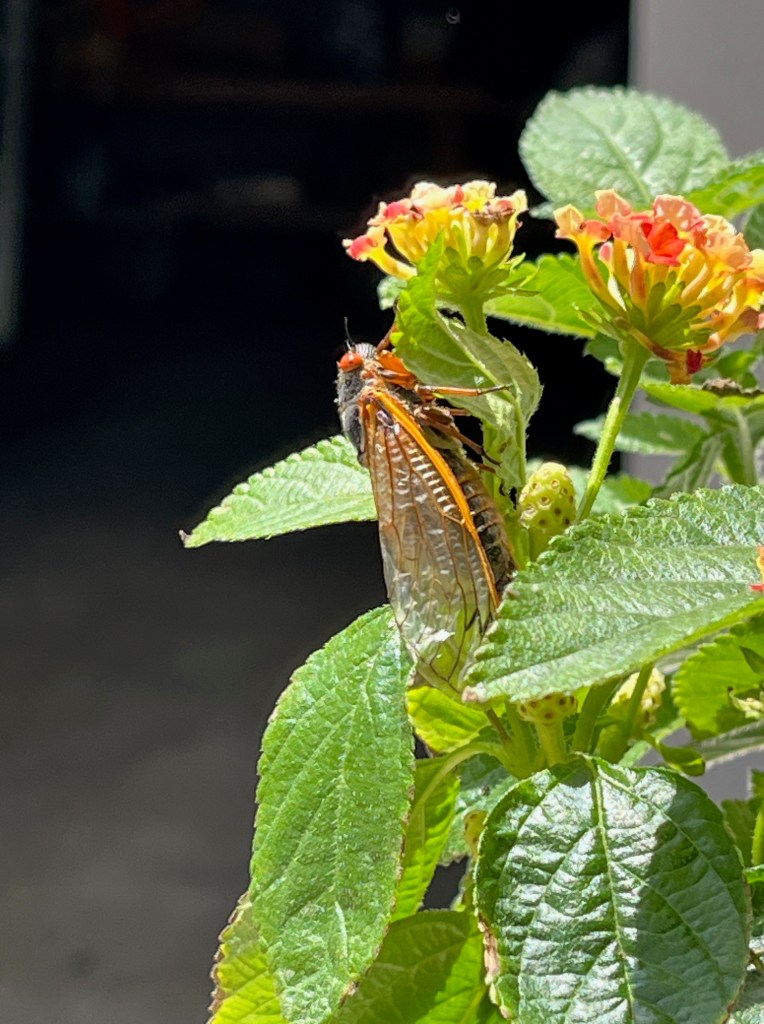
As for each of us, we can, at any moment, shed our outgrown shells and flex new wings. It need not take 17 years before we take flight into the next phase of our lives, and live with intensity and purpose, for as long as we possibly can.
Special thanks to Jess Blalock, naturalist at Kanawha State Forest, for teaching me about cicadas. Here are other helpful resources: https://www.cicadamania.com and www.magicicada.org.


Leave a Reply