
Five-minute read
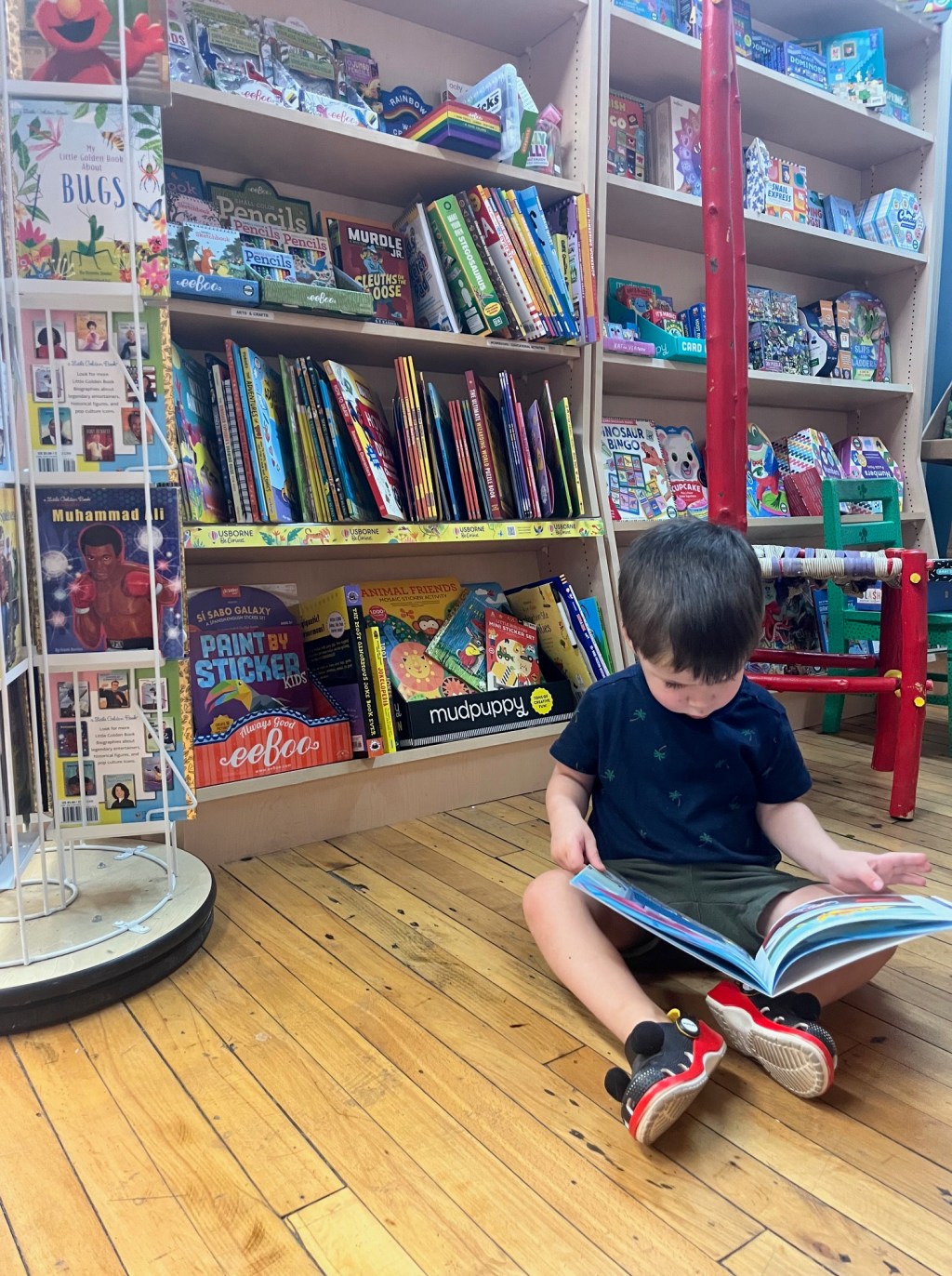
My three-year-old grandson, Myles, is a voracious reader. He doesn’t read words yet, but when I hand him a new book, he pores over it, turning the pages slowly, studying the pictures. Then, he asks me to read it to him. If he likes the book, he asks to hear it again. And again. And again.
On my last visit, I brought a volume of Peppa Pig stories, which became his obsession. We read them over and over: Peppa goes to the grocery store. Peppa is visited by the tooth fairy. Peppa plays soccer. Peppa goes to the dentist.
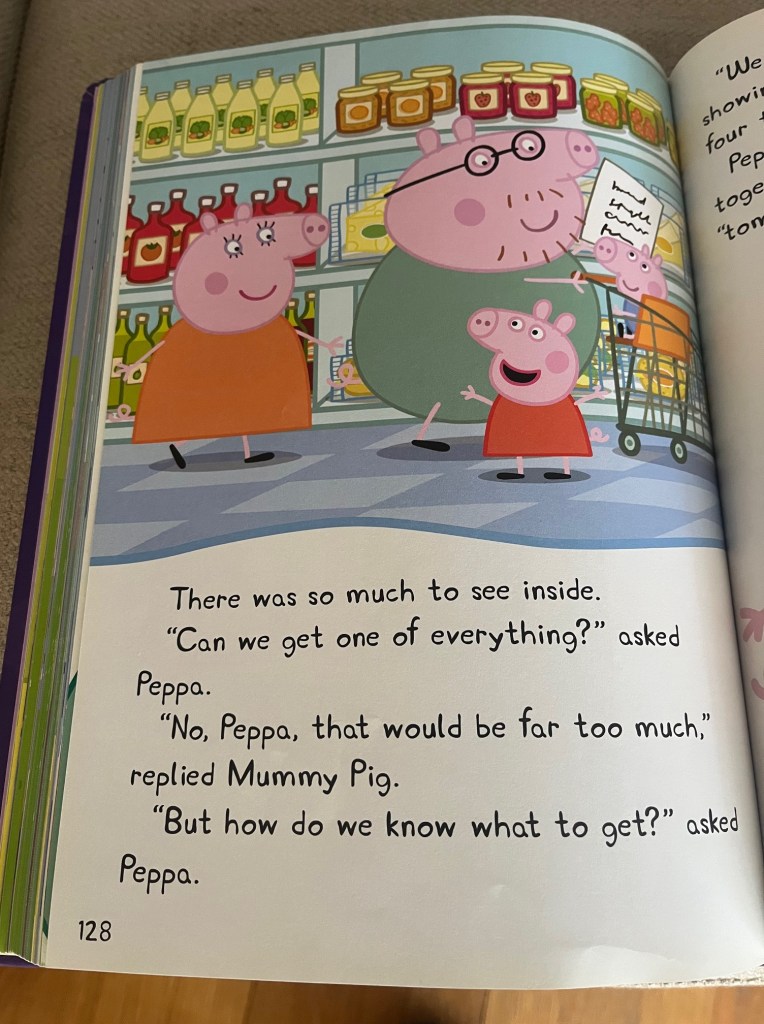
Peppa’s family figures prominently in all the stories. There’s Mummy Pig, Daddy Pig, Peppa, and her little brother, George. Myles has a mommy and a daddy too. Yet, I wondered. What about the many young readers whose families are different?
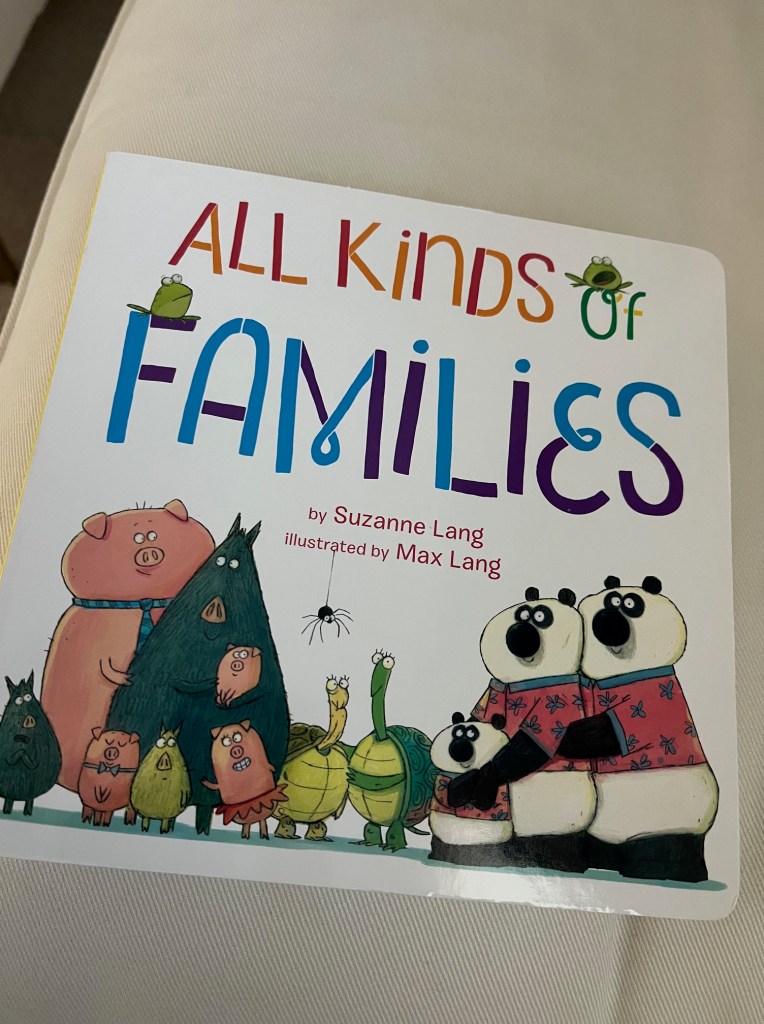
Thus, I was delighted when, one evening at bedtime, Myles brought me a colorful board book (Whew! Not Peppa!) filled with whimsical animal drawings, titled All Kinds of Families.
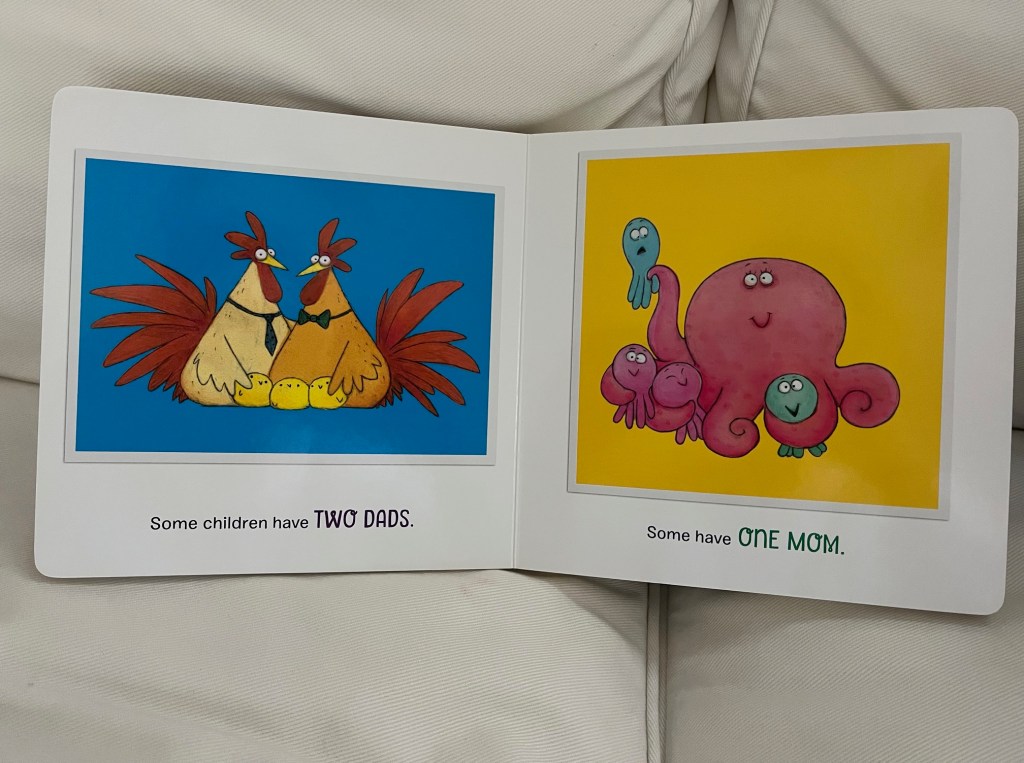
“Some children have TWO DADS. Some have ONE MOM,” the book explains. “Some children live with their FATHER. Some have TWO MOTHERS.” It goes on to say that children might also live with a grandma or a grandpop, or maybe an auntie. It concludes this way: If you LOVE EACH OTHER, then you are a FAMILY.
With my interest in family depictions piqued, I later noted a classic in Myles’s collection that features only the children’s mother. In Dr. Seuss’s The Cat in the Hat, two bored kids bemoan a rainy day with nothing to do while their mother is away. Enter The Cat in the Hat, who wreaks havoc all over the house, including balancing, among other things, his umbrella, a bottle of milk, a cake, and the pet fish precariously in the air, until they all come tumbling down.
What a mess! But never fear, the Cat swiftly cleans it all up and then skedaddles, just as the kids’ mother appears in the doorway.
All we see of their mother is her lower leg and prim-looking shoe. With The Cat’s original copyright in 1957, we might conclude that the kids’ dad, though he is not mentioned at all, is at work. Yet, earlier in the book, as the Cat bumbles his way through the house, we catch a glimpse of the mother’s bedroom, which features one very small, perhaps twin-sized bed.
I wondered if this was intentional—an early depiction of single motherhood? Yet, a Google search reveals almost nothing about the mother. She is clearly a peripheral character. In any case, Myles seemed far too absorbed in the Cat-induced mayhem to consider her marital status.
Then, as if on cue, as I was considering it, data from the Pew Research Center arrived via email in a National Public Radio news summary. According to Pew, at 23 percent, the United States has the highest rate of children living in single-parent households in the world. That’s almost a quarter of our children living with one parent. (U.S. has world’s highest rate of children living in single-parent households | Pew Research Center)
This statistic may be reflected in another of Myles’s selections, a contemporary, visually stunning book titled A Little Like Magic. It’s about a little girl confined to a wheelchair, who goes with her mother (there is no mention of another parent) to a park to see a display of sparkling ice sculptures. At first, the little girl is reluctant to go. Like any child, she doesn’t want to put on a heavy coat, itchy hat, and stiff boots to brave the cold night air. Understandably, she also doesn’t like crowds.
And, she wonders, won’t the sculptures just melt away one day? Her mother confirms that they will.
“I don’t think it’s worth it,” she decides, to go to all that trouble to make something that won’t last.
But later, when she sees the giant, dazzling figures—a whale, a bird, a horse, a butterfly!— she is enchanted.
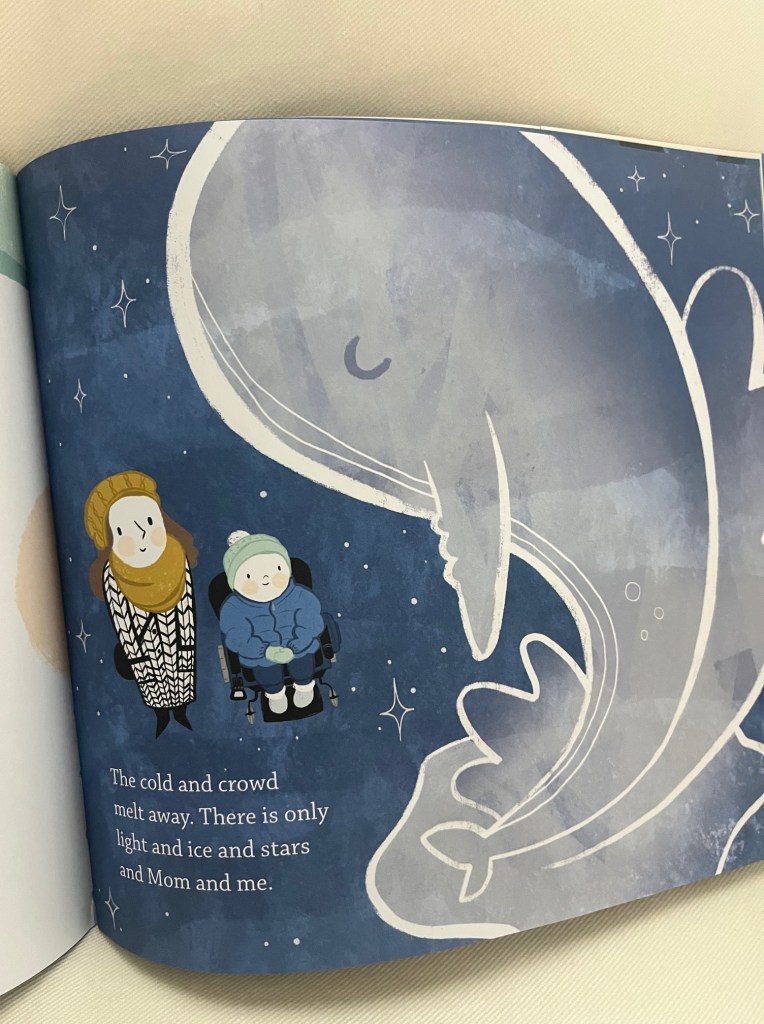
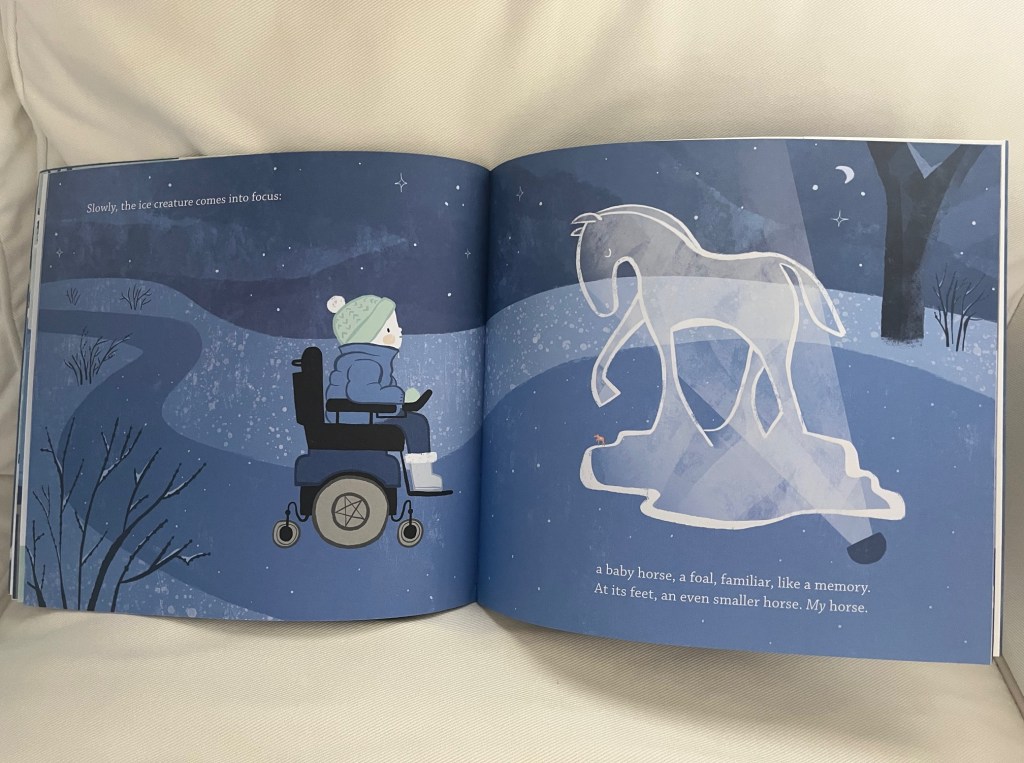
“Sometimes you have to brave the cold to experience something special,” the book concludes.
Whether the little girl has one parent or two, Myles might see himself in her aversion to coats and crowds. He may understand that not all children are as able-bodied as he is, but that, ultimately, all kids—and people—are more alike than they are different.
The Peppa stories, though tiresome for Grandma, also encourage empathy and illustrate that having fun is more important than winning. Other classics in Myles’s collection offer key life lessons. Mike Mulligan and His Steam Shovel emphasizes the importance of hard work and feeling useful. The Little Engine That Could teaches that kindness and generosity win over selfishness, and that a little determination goes a long way.
Indeed, these messages are timeless. But I am glad that some contemporary children’s book authors are depicting a real and gloriously diverse world—the one Myles and his peers will inherit—and encouraging awareness, kindness, inclusivity, and love.
 Sheila McEntee
Leave a comment